k- Diagram the distribution of water use in your country: agriculture, residential, and industrial.
 | As it can be seen in this graph Australia uses most of its water for Agriculture. Almost 65% of the countries water is used for this purpose, consequently if they want to save water they should focus on implementing new ideas, technology and regulations to lower water consumption. A lot of water is also used in households and for water supply. However, it is interesting to see how from 2001- 2004 the amount of water used for Agriculture decreased substantially, while the other water consumption areas stayed almost the same. This shows how the Australian government is aware of their weaknesses and are doing everything they can to change this. As a dry country Australia can't afford to use so much water, since a time will come when there is no more water left. |
l- Describe and evaluate the sustainability of freshwater resource usage with reference to a specific location or region.
Where is the water found?
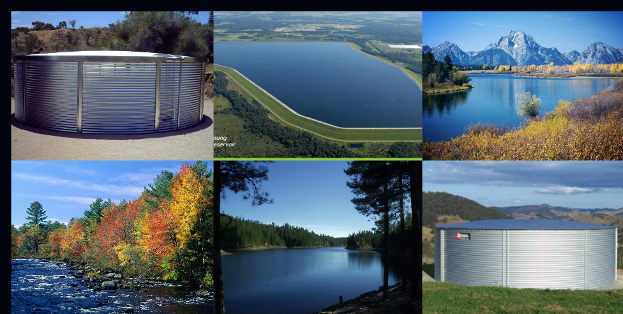
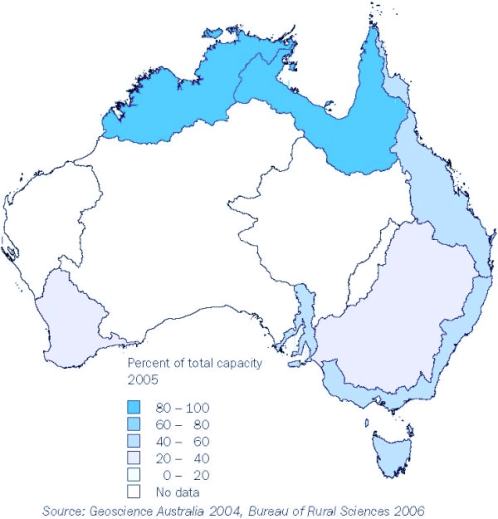
Australia's main water sources are the following. These are located in different parts of the country (Surface Water)
- Rivers
- Lakes
- Reservoirs
- Rain Water Tanks
 |  |
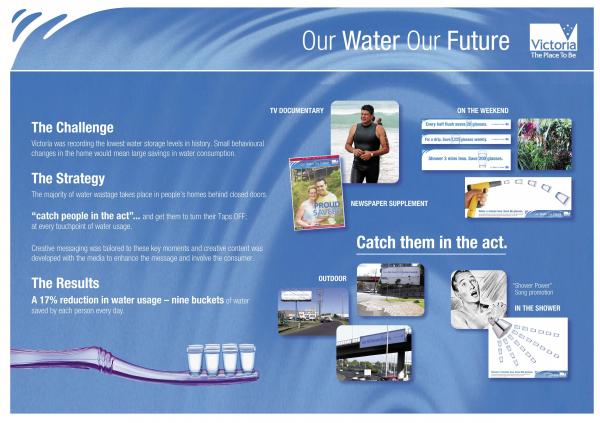
- Using water wisely
- Taking action on climate change
- Securing water supplies
- Supporting healthy rivers
 |  |
Other Water Saving Initiatives:
- Strengthening Basin Communities: This program will enable people to assist local governments for a community-wide planning for a future with less water.
- Water Efficiency, Labeling and Standards: This scheme requires certain types of households water-using products to rate and reflect the efficiency of the water used.
- Water Recycling: They are beginning to work on guidelines to be able to manage the health and environmental risks of recycling water. This will be divided into different sections, to then determine which one can or can't be used.
- National Guidelines For Residential's Customers Water Accounts: It is a voluntary process in which consumers have the opportunity to engage in water conservation programs through informative water bills.
- National Urban Planning Principles: "provide Australian governments and water utilities with the tools to better plan the development of urban water and wastewater service delivery in a sustainable and economically efficient manner."
